ICT: A Future to Foresee


This subject gave me insight on how  ICT (Information Communication  Technology) revolves the modern world by being present in all aspects of our society, helping it to advance faster and further for the future generations.

Throughout the course of this semester, I had come to an awareness of the disadvantages ICT can bring upon us from addiction and decreased productivity to punishable crimes like phishing, fraud, and hacking. But in light of these dangers, it also gives us the ultimate pleasure in connecting with people from all over the world, making the process of communication, sending/receiving information, and storing data faster and more efficient as ever.

I also learned the concept of copyright, the evolution of websites from Web 1.0 to 3.0, and how ICT emerged from the Philippines, eventually making it the “ICT hub of Asia”.
The Appeal in Pastil

Today we are going to talk about one of my favorite steet foods: Pastil.

Also spelled as pastel in Maguindanaon,
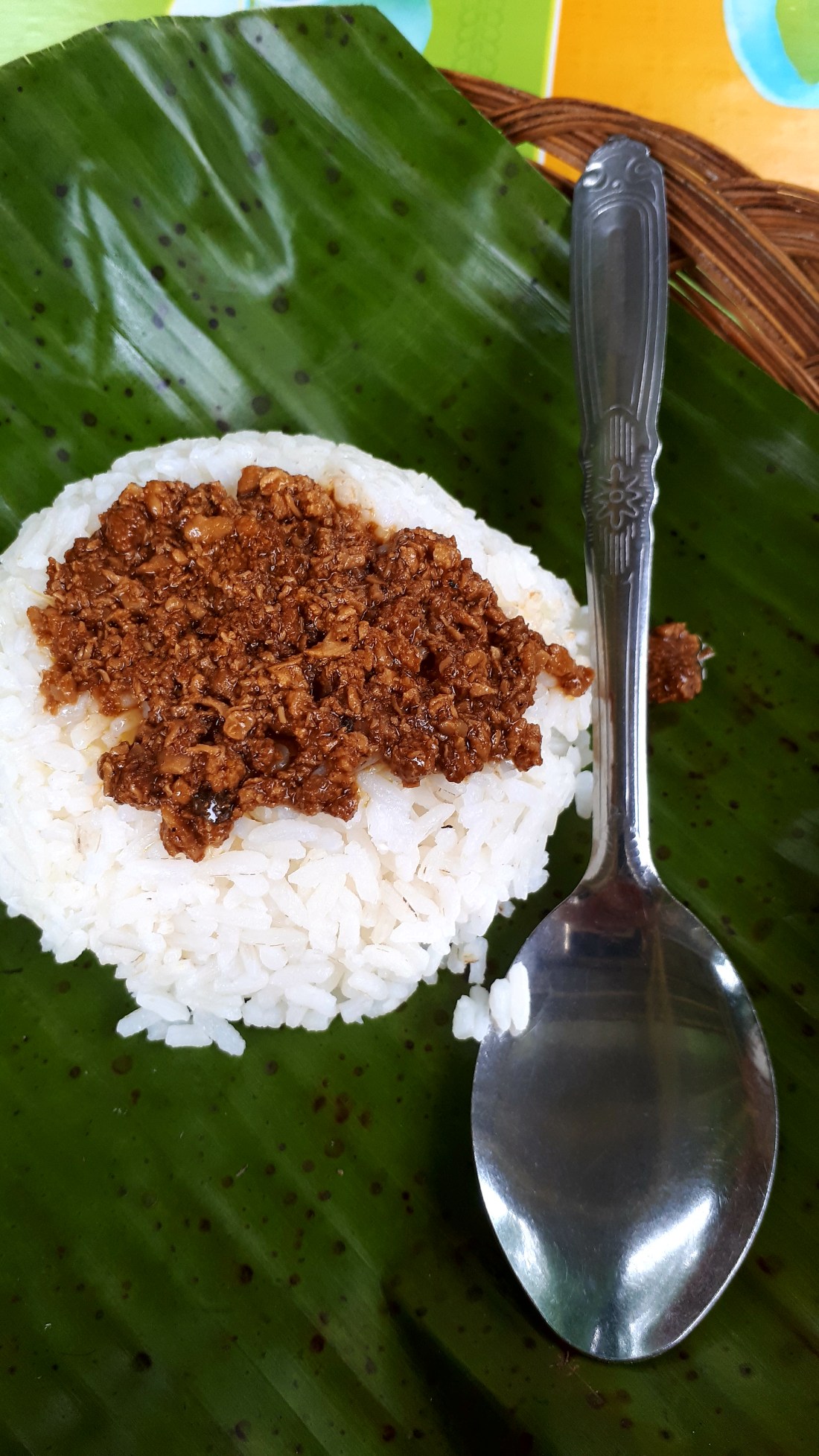
patel or pater in Maranao, and paster in Iranun, it is a meal that consists of rice and viand that is rolled in a banana leaf.
20170822_132522
Photo by me

I think one of the main reason why this certain street food is a favorite of mine, and probably for many Filipinos, is because of its affordability. For a fair price, you can enjoy a cheap but tasty meal that will make you to want more.

A blog article by Edgie Polistico (2010) explains the process on how this meal is made:

 “A scoop (about a cup) of steamed or boiled plain rice is placed on the center of a spread of banana leaf and topped with shreds or flakes of sautéed meat or fish called kagikit. 

The cut of banana leaf is wilted first in fire or ember to soften and make it a pliant wrapper. 
The scoop of cooked rice is then molded by folding the banana leaf. Before finally wrapping the rice, it is topped with kagikit(sautéed shredded meat) usually that of shredded meat of braised fish or chicken. Then the leaf is finally rolled around the topped rice. It is sealed by folding both ends similar to that of suman (Tagalog rice stick), only that pastil is wider and flatter in shape than that of suman. 
Special version of pastil has more meat, plus a hard-boiled chicken egg (shelled and cut into halves) as toppings, and the rice is mixed with little amount of glutinous rice that would bind well the molded meal.”
Whether eating it with bare hands or with utensils, this meal will never fail to satisfy your hunger anywhere and anytime of the day.


Waste Water Disposal:A Problem in the Community


The water disposal in Matanao has been one of the major problems of the people residing here, especially the students. Most places here in Matanao are in need of more and abundant water consumption because there is more consumer than it is produced.  There are really a lot of concerns and complaints about this matter as water is really the life for everyone.

Most houses residing in this area are dependent to electricity before they could get water because it is connected to each other, so, when in times of black outs the people cannot do their task because of this. Boarding houses are common in this area so it is also hard for them as there are a lot of people staying there.

Improper disposal of waste water can say alot about the overall cleanliness of a community. If proper practices like these are neglected, it may even affect the quality of the water that comes forth to the community.

The people and the local officials must do something to provide the needs of these people and lessen their problems and burdens.

War on Drugs: An Affliction to Philippine Society

By: Karen Frances Eng

When Philippine president Rodrigo Duterte came to power in June 2016, he immediately declared a “war on drugs,” ordering a dedicated police force to carry out a massive crackdown that has resulted in the arrests, surrenders and deaths of suspected drug users and dealers. So far, human rights groups estimate that the campaign has claimed the lives of 7,000 to 12,000 Filipinos, most of them from Manila’s poorest neighborhoods.

Recently, photojournalist and TED Fellow Ed Ou traveled to the Philippines to document the situation for NBC’s Left Field. There, Ou captured the effects of this crackdown on the family of Kosa Bulaclac, a man who was killed by Duterte’s forces on June 27, 2017. Soon after Ou’s documentary on the family, The Kill List (see below) launched, Duterte was forced to call off the drug police in the midst of scandal around the deaths of several teenagers. However, the leader continues to defend his stance — one that President Trump has praised as “a great job.”

It remains to be seen whether Duterte’s recent cease-fire will hold. On the eve of President Trump’s visit to the Philippinestoday, we asked Ou and his co-author Aurora Almendral to what exactly the situation on the ground looks like, and how it compares to the war on drugs in the United States.

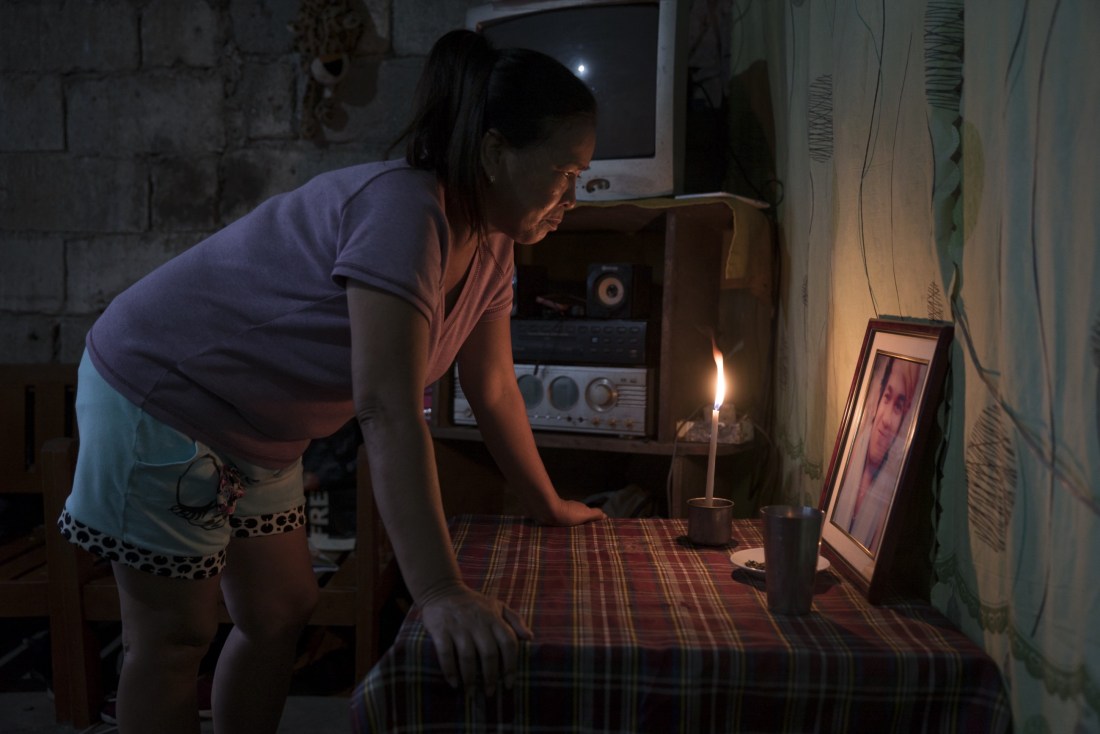
Julie lights a candle at dusk for her son, who was killed by masked policemen last June—one of thousands of who have been killed in Duterte’s violent campaign against drugs. Masked policemen entered their home in the middle of the night and killed her son. Photo: Ed Ou

What now? On October 10, 2017, 15 months after the anti-drug war began, a series of scandals — including the deaths of three teenagers at the hands of police in blatant defiance of procedure — forced Duterte to suspend the drug war. “Caloocan, where our documentary takes place, was at the center of the scandal,” say Almendral and Ou. “Caloocan’s entire police force, including Officer Philip Tizon, who appears in the documentary, were relieved of duty and reassigned to other posts in Manila.”

Whether or not the killings resume, the damage has already been done — to the country’s rule of law and, most tragically, to the people who have been killed, say Almendral and Ou. “No amount of justice, either in the Philippines or by international courts, will bring back those who were killed at the behest of their president.”