By: Karen Frances Eng
When Philippine president Rodrigo Duterte came to power in June 2016, he immediately declared a “war on drugs,” ordering a dedicated police force to carry out a massive crackdown that has resulted in the arrests, surrenders and deaths of suspected drug users and dealers. So far, human rights groups estimate that the campaign has claimed the lives of 7,000 to 12,000 Filipinos, most of them from Manila’s poorest neighborhoods.
Recently, photojournalist and TED Fellow Ed Ou traveled to the Philippines to document the situation for NBC’s Left Field. There, Ou captured the effects of this crackdown on the family of Kosa Bulaclac, a man who was killed by Duterte’s forces on June 27, 2017. Soon after Ou’s documentary on the family, The Kill List (see below) launched, Duterte was forced to call off the drug police in the midst of scandal around the deaths of several teenagers. However, the leader continues to defend his stance — one that President Trump has praised as “a great job.”

It remains to be seen whether Duterte’s recent cease-fire will hold. On the eve of President Trump’s visit to the Philippinestoday, we asked Ou and his co-author Aurora Almendral to what exactly the situation on the ground looks like, and how it compares to the war on drugs in the United States.
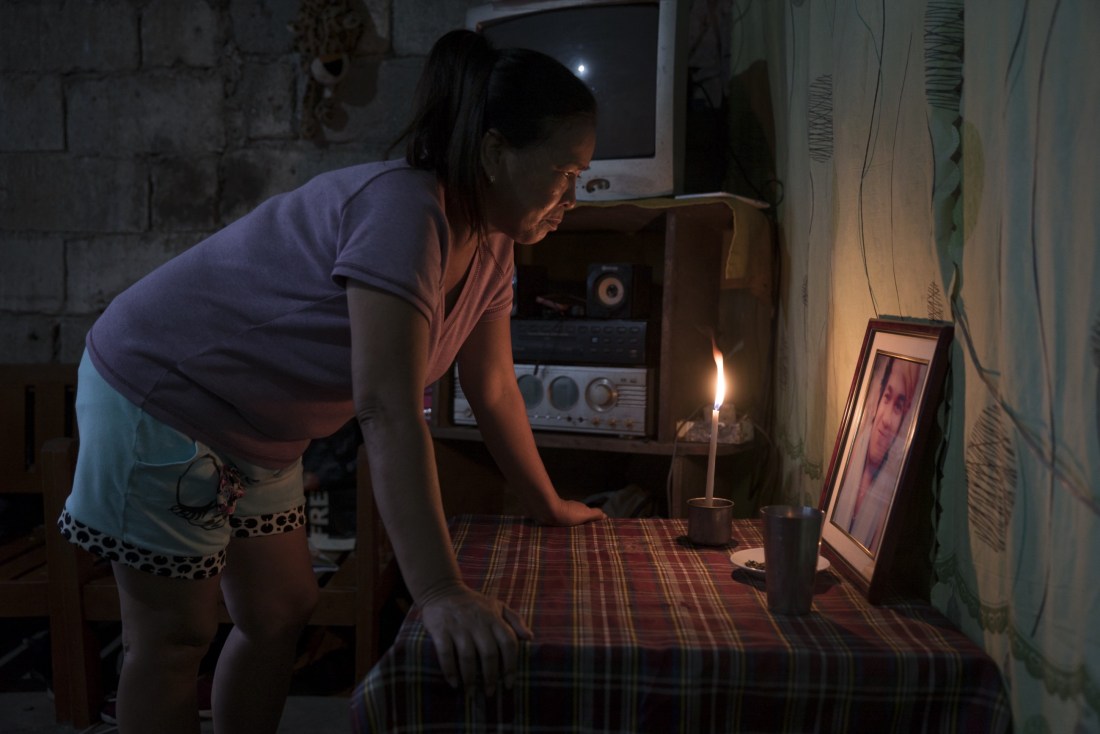
What now? On October 10, 2017, 15 months after the anti-drug war began, a series of scandals — including the deaths of three teenagers at the hands of police in blatant defiance of procedure — forced Duterte to suspend the drug war. “Caloocan, where our documentary takes place, was at the center of the scandal,” say Almendral and Ou. “Caloocan’s entire police force, including Officer Philip Tizon, who appears in the documentary, were relieved of duty and reassigned to other posts in Manila.”
Whether or not the killings resume, the damage has already been done — to the country’s rule of law and, most tragically, to the people who have been killed, say Almendral and Ou. “No amount of justice, either in the Philippines or by international courts, will bring back those who were killed at the behest of their president.”


 Drexie's Diner